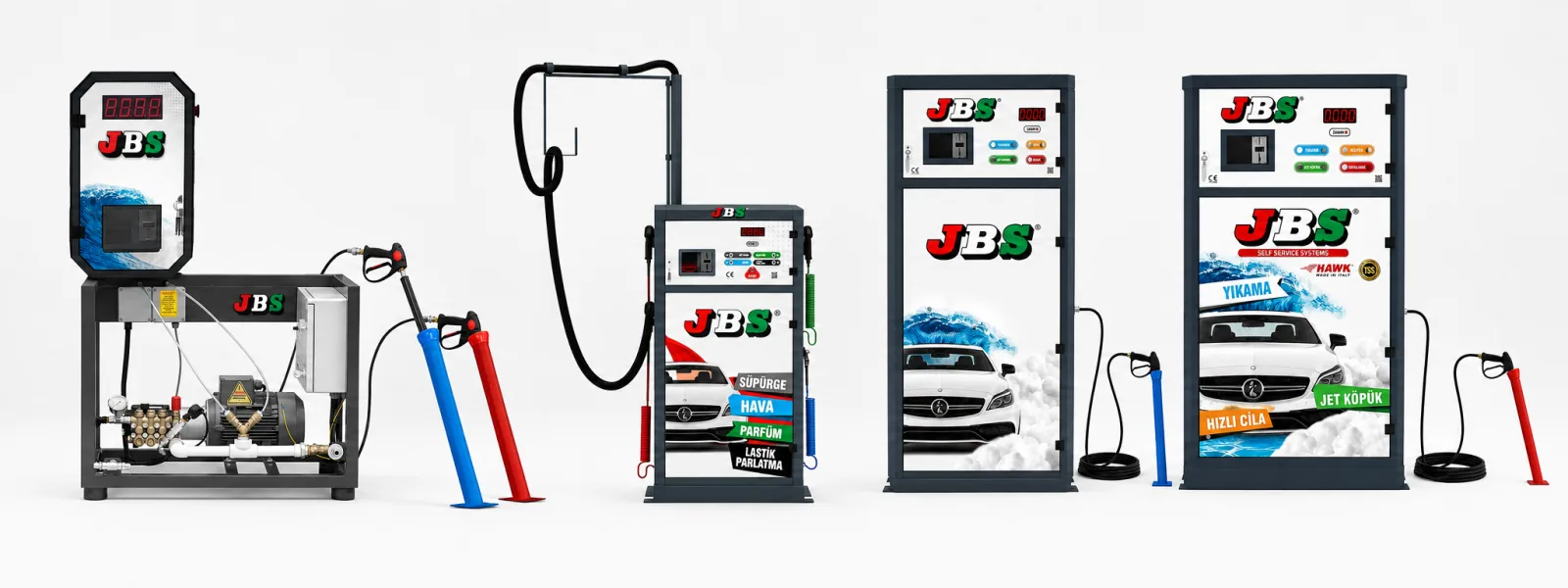
Choose self-service equipment by location, traffic, bay count, pump quality, functions, payment options, expansion plans and infrastructure.
This guide explains the main technical and operational points behind choosing equipment for a self-service car wash. The aim is to help professional users compare equipment on real performance rather than a single specification or purchase price.
Choose a System for the Location
Location determines traffic, vehicle mix, expected peak times and the number of bays that can operate profitably. Visibility, access, waiting space, water and power availability, drainage and local competition should all be reviewed.
The Pressure Washing System Is the Foundation
Pressure is important, but it should never be evaluated alone. The correct level depends on the surface, dirt type, nozzle, working distance, water flow and operator technique. Excessive pressure can damage paint, seals or sensitive components.
Foam and Wax Improve Service Quality
Reliable technical service and readily available spare parts reduce downtime and protect the investment. Ask who will maintain the pump, motor, burner or steam system, how quickly parts can be supplied and what is included in the warranty.
Vacuum and Blower Can Add Revenue
A blower removes water and dust from mirrors, grilles, seams, vents and other narrow areas. In self-service sites it can create an additional revenue function; in detailing it helps reduce dripping after cleaning.
Payment Systems Affect User Experience
The payment system should be intuitive, weather-resistant and easy to manage. Coin, card and QR options can be combined according to customer habits, while remote monitoring and clear time control simplify operation.
Pump Quality and Spare Parts Matter
The pump is the core component that creates working pressure. Valve, piston, seal or oil problems can cause low pressure, pulsation, leakage and unusual noise. Pump quality, maintenance access and spare-parts availability are therefore critical buying criteria.
Modular Systems Provide Investment Flexibility
Purchase price is only one part of total ownership cost. Pump life, energy and water consumption, maintenance, downtime, accessories and service support can make a higher-quality machine more economical over its working life.
Plan the Infrastructure Correctly
Plan the Infrastructure Correctly should be evaluated in relation to the machine's real operating conditions. The correct setup balances cleaning performance, operator safety, energy and water consumption, maintenance requirements and long-term service support.
Conclusion
The correct decision for choosing equipment for a self-service car wash should be based on the real application, expected workload, technical specifications and after-sales support. Comparing working pressure, water flow, pump quality, electrical requirements, accessories and service availability helps prevent costly mismatches.
Recommended Solutions
Related Products and Categories
Common Questions
Frequently Asked Questions
What Determines Self-Service Car Wash Setup Prices?
The installation cost of a self-service car wash varies depending on the number of bays, machine functions, payment system, water and electricity infrastructure, installation area, equipment capacity and service support.
What Determines the Price of a Self-Service System?
The price varies according to the number of bays, functions, payment system, pump group, site infrastructure, and level of automation.
What Is a Self-Service Car Wash System?
A self-service car wash system allows users to wash their own vehicles using coin-, card-, or QR-code-operated equipment. Functions such as foam, rinsing, wax, vacuuming, and air blowing can be provided in one area.
Who Is a Self-Service Car Wash System Suitable For?
It is suitable for fuel stations, car wash businesses, shopping-center car parks, residential-complex car parks, fleet operators, dealerships, and locations with high commercial-vehicle traffic. It can create an additional revenue stream in areas with high vehicle traffic.
What Should Be Considered When Choosing a Self-Service Car Wash System?
Machine capacity, pump quality, pressure, water flow rate, payment system, foam unit, vacuum and blower area, electrical infrastructure, drainage, and service support should be evaluated together.
Does a Self-Service Car Wash System Require Maintenance?
Yes. The pump, hose, spray gun, nozzle, foam system, payment unit, filters, and vacuum and blower equipment should be checked regularly. Routine maintenance reduces the risk of failure and helps the system operate efficiently for longer.
Which Functions Should a Self-Service Car Wash System Include?
A basic system should include pressure washing, foaming, and rinsing. More professional installations can also include wax, hot water, vacuuming, air blowing, mat cleaning, and payment automation.
How Is the Most Suitable Self-Service Car Wash System Selected?
The most suitable system is selected by evaluating vehicle traffic, the number of wash bays, required functions, payment method, pump capacity, water and electrical infrastructure, site layout, maintenance needs, and service support.