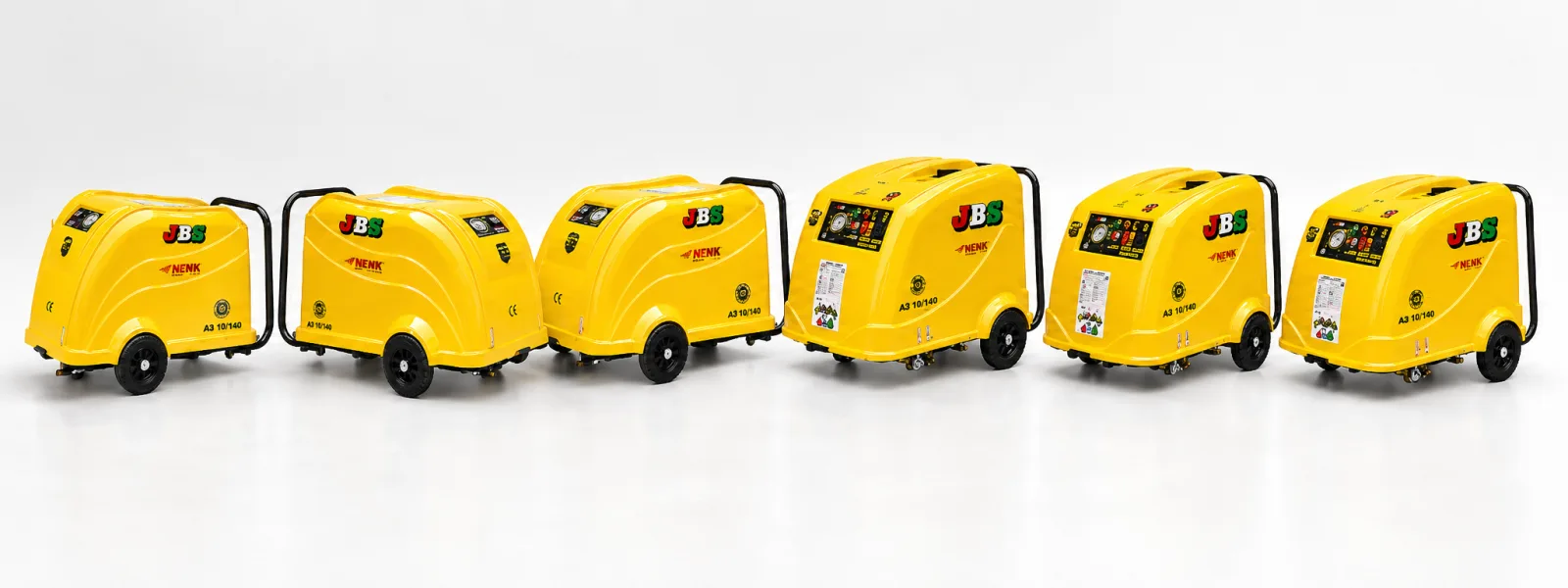
The Unloader Is Part of the Hydraulic System, Not an Accessory
UK commercial buyers frequently see unloader valve, bypass valve and control set with bypass in professional pressure-washer specifications.
Its job is to regulate system pressure and provide an alternative flow path when required.
When a compatible trigger gun closes, an unloader can divert pump flow into bypass instead of allowing the positive-displacement pump to continue building pressure against a closed outlet.
That makes correct valve selection fundamental to the pressure-washer system.
Return to Pump and Return to Tank Are Not the Same Arrangement
This matters on equipment expected to spend time idling.
Some systems circulate bypass water back towards the pump inlet.
Others use a return-to-tank unloader.
Returning water to a tank can reduce the repeated recirculation of the same small volume of water and help control heat accumulation during standby periods.
A commercial buyer should therefore ask where the bypass water actually goes rather than simply confirming that a bypass valve exists.
250 Bar / 15 L/min Is Already Heavy-Duty Territory
UK industrial suppliers currently offer 250 bar systems around 15 L/min with Interpump pumps, 1450-rpm drive arrangements and bypass control sets.
This specification is more relevant to:
-
fleet depots,
-
plant machinery,
-
agricultural equipment,
-
trucks,
-
chassis,
-
heavy commercial cleaning
than routine passenger-car valeting alone.
For those applications, flow rate is just as important as maximum pressure.
Maximum Pressure Is Not the Normal Vehicle Setting
A 250 bar machine provides pressure reserve.
It does not mean every surface should be cleaned at 250 bar.
Paint, trims, seals, electrical components, sensors and cameras require suitable working pressure, nozzle selection and distance.
Commercial equipment should therefore provide controlled pressure, not simply maximum pressure.
Compare Bypass with Trigger-Controlled Systems
A standard bypass-regulated machine and an electrically trigger-controlled machine can behave differently when the operator releases the gun.
Buyers should establish:
Does the pump remain running in bypass? Does the machine use total-stop control? Is pressure trapped in the hose? Is flow returned to a tank?
These details affect usability, standby behaviour and maintenance.
Do not treat “bypass” and “auto stop” as interchangeable terms.
Specify for Duty Cycle, Not the Headline Number
The JBS JSK-250 Commercial Cold Water Pressure Washer provides adjustable pressure to 250 bar and 15 L/min flow with an Italian HAWK pump.
Its stronger commercial fit is fleet, truck and equipment work rather than using maximum pressure on every passenger vehicle.
Electrical compatibility must also be confirmed for the exact UK installation before ordering.
Build the System Around the Workload
Review the JSK-250 Commercial Pressure Washer, compare professional capacities under Car Wash Machines, and match the equipment to Commercial Vehicle and Fleet Cleaning. Use the Pressure vs Flow Rate Guide to specify hydraulic output. Provide vehicle mix, operating hours, water supply and electrical infrastructure to request a commercial JBS quotation.
Recommended Solutions
Related Products and Categories
Common Questions
Frequently Asked Questions
Where Is a 250-Bar Car Wash Machine Used?
A 250-bar car wash machine is preferred for more intensive and professional applications. It provides strong pressure for fleet vehicles, commercial vehicles, heavily soiled surfaces, chassis cleaning, construction machinery, and durable surfaces.
What is the operating pressure of the JSK 250?
The JSK 250 has an adjustable operating pressure of 20–250 bar. The appropriate pressure should be selected according to the surface, dirt level, nozzle type, and working distance.
What is the motor power of the JSK 250?
The machine is powered by a 5.5 kW / 7.5 HP motor. The motor and pump work together to produce adjustable high pressure with a 15 L/min water flow rate.