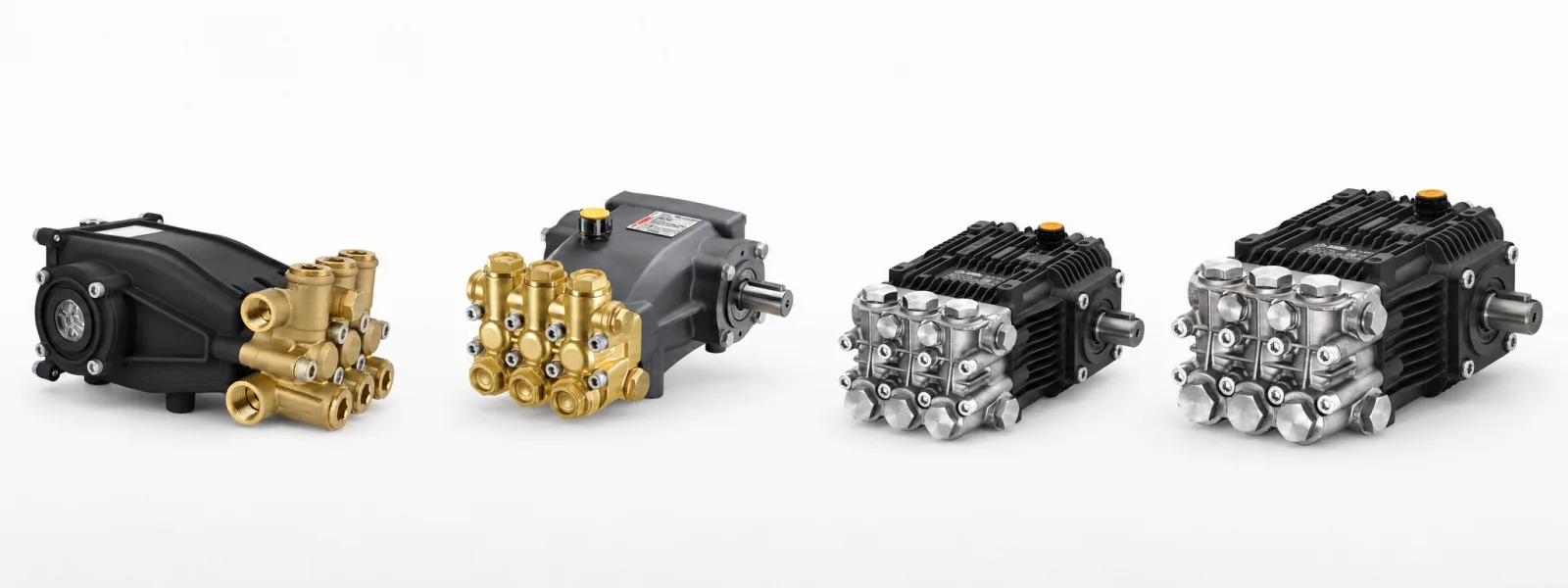
The pump is the heart of a professional pressure washer, but low pressure does not automatically mean pump failure.
Nilfisk recommends checking airtight connections and water supply before considering worn or stuck valves and pump seals. Kränzle similarly identifies pressure loss, fluid leakage and short cycling as key diagnostic symptoms, with pulsating pressure often pointing toward check valves.
Persistent Loss of Pressure
If the machine receives sufficient water and the inlet filter and nozzle are clear but it still cannot reach normal operating pressure, worn pump valves, seals or the unloader system may be responsible.
A professional machine should maintain stable pressure and flow under its intended workload. JBS Car Wash Machines include different pressure and flow configurations for professional use.
Pulsating or Surging Pressure
A rhythmic rise and fall in pressure can result from air or inadequate water supply. If those causes have already been eliminated, pump check valves become an important diagnostic point.
Kränzle describes pulsating pressure loss as a characteristic symptom of damaged or stuck check valves.
Water or Oil Around the Pump
Continued fluid leakage from the pump should not be ignored. Worn packing, O-rings or oil seals may require professional inspection.
If replacement is necessary, pump selection must match pressure, water flow, RPM, motor power, shaft and connection configuration.
The JBS HAWK NHDP-200 High-Pressure Washer Pump is specified at up to 200 bar and 30 L/min, while JBS also supplies an AR Annovi Reverberi Pressure Washer Pump. JBS explicitly notes that pump compatibility should be confirmed before installation.
A pressure washer pump should be suspected only after basic water-supply, air, filter and nozzle issues have been ruled out and pressure loss, pulsation or leakage continues.
Recommended Solutions
Related Products and Categories
Common Questions
Frequently Asked Questions
What Information Is Required When Ordering a Spare Part?
The machine make and model, serial number, part code, dimensions, connection details, and, if possible, a photo of the identification label are required.
What Information Is Required to Select a Pump Spare Part?
The pump label, make and model, serial number, part code, and, if possible, dimensions of the removed part are required.
What Should Be Checked When Selecting a Hose and Spray Gun?
The maximum operating pressure, temperature, connection size, and machine compatibility should be checked.