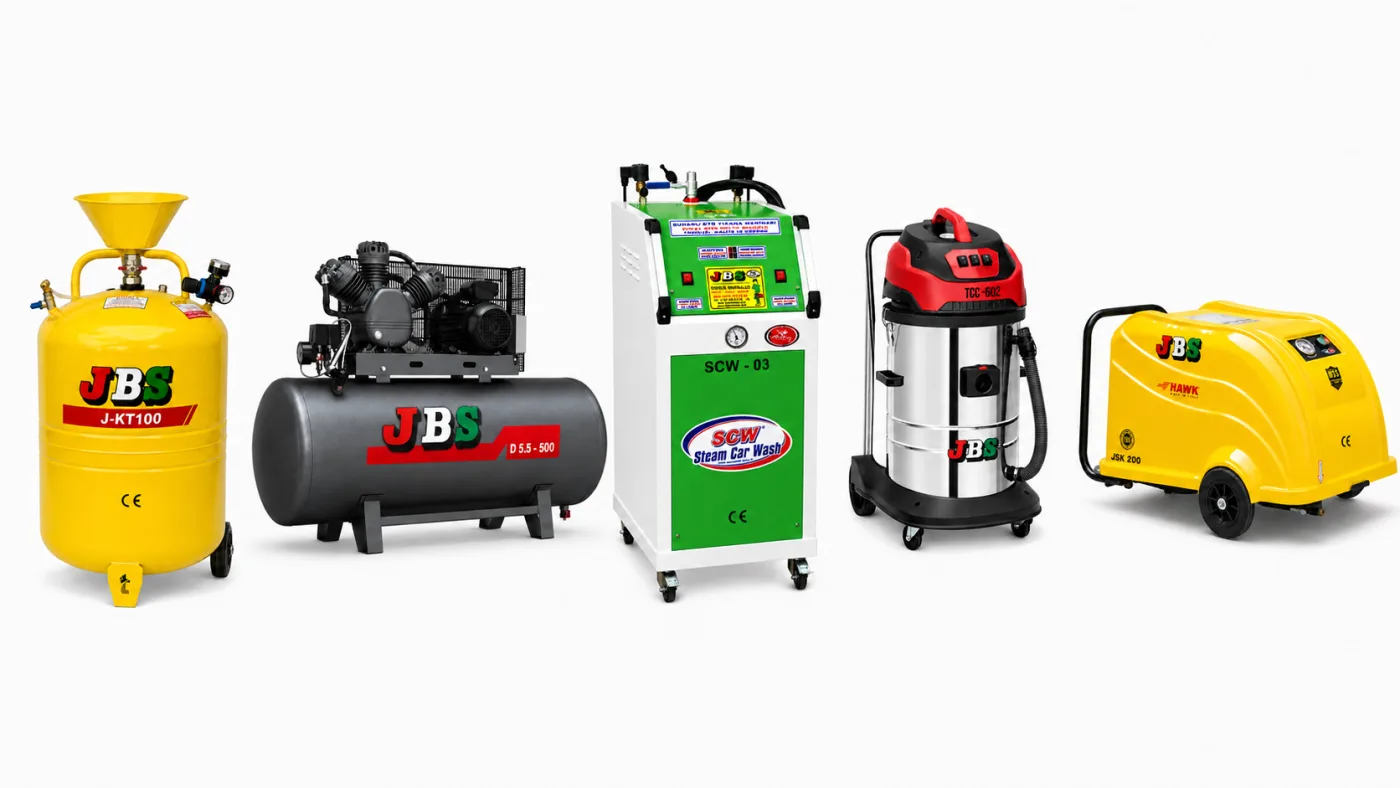
The selection of a professional car wash machine should not be based solely on the machine’s pressure rating or price. The right machine should be determined according to the business’s daily vehicle volume, application area, cleaning requirements, electrical infrastructure, and access to technical service. For car wash businesses, vehicle service centers, dealerships, car rental companies, and fleet-maintenance facilities, choosing the correct machine directly affects both cleaning quality and operational efficiency.
The market offers various options, including cold-water car wash machines, hot-and-cold-water car wash machines, steam car wash machines, self-service systems, and high-pressure water jetting machines. It is therefore important to understand which machine type is best suited to each application before purchasing.
Clearly Define Your Intended Application
The first step in choosing a car wash machine is to identify the intended application accurately. Cold-water pressure washing machines may be sufficient for routine exterior vehicle washing. However, hot-and-cold-water machines may be more suitable for demanding applications involving oil, grease, chassis grime, engine areas, or heavy vehicles.
Steam car wash machines offer advantages for cleaning vehicle interiors, door jambs, air vents, seat rails, detailed wheel areas, and other narrow spaces. When establishing a self-service car wash facility, washing, foam, wax, vacuum, and blower systems compatible with coin, card, or QR-code payment solutions should be evaluated together.
Pressure Rating Alone Is Not Sufficient
One of the most closely examined specifications when purchasing a professional car wash machine is its pressure rating. However, higher pressure alone does not guarantee better cleaning. Pressure represents the force applied to the surface, but water flow rate is equally important for cleaning performance.
Excessive pressure should not be used on vehicle bodywork, plastic components, or sensitive surfaces. Higher pressure may be required for wheels, chassis components, wheel arches, commercial vehicles, and durable surfaces. Pressure, water flow rate, nozzle type, and operating distance should therefore be considered together.
Water Flow Rate Affects Cleaning Speed
Water flow rate refers to the volume of water delivered by the machine per minute. A car wash machine with an adequate flow rate helps remove dirt from the surface more quickly. In high-volume car wash businesses, the flow rate directly affects cleaning time.
Low-flow machines may slow the workflow in businesses that wash a large number of vehicles each day. Adequate water flow supports faster and more efficient cleaning of larger vehicle surfaces, fleet vehicles, minibuses, vans, and commercial vehicles.
Cold Water, Hot and Cold Water, or Steam?
The machine type should be selected according to the cleaning requirement. Cold-water car wash machines provide practical and economical solutions for routine exterior washing and removing dust, mud, and road dirt. Their operating structure is simpler because they do not heat the water.
Hot-and-cold-water car wash machines provide stronger performance on oily and stubborn contamination. Hot water helps loosen dirt on engine areas, chassis components, wheels, workshop equipment, and other durable surfaces.
Steam car wash machines are particularly useful for detailed cleaning. They support controlled cleaning of door jambs, seat rails, air vents, dashboard areas, detailed wheel sections, and narrow interior spaces while using less water. However, electronic components, exposed connectors, and sensitive surfaces must be treated carefully.
Pump Quality and Spare-Parts Support Are Important
The pump is one of the most critical components of a professional car wash machine. Pump quality directly affects pressure performance, water flow, and operating efficiency during extended use. A low-quality or incompatible pump system may quickly cause pressure loss, water leakage, and reduced performance.
The pump brand, piston construction, seals, gaskets, valves, connection components, and service support should be checked before purchasing. Spare-parts availability is particularly important for high-volume businesses. Easy access to pumps, guns, hoses, nozzles, seals, and gaskets helps support uninterrupted long-term operation.
Check the Electrical Infrastructure
The business’s electrical infrastructure must be checked before selecting a car wash machine. Some machines operate with a 220 V supply, while more powerful professional models may require a 380 V connection. Motor power, operating voltage, and installation compatibility should be clarified before purchasing.
A high-capacity machine may not operate efficiently in premises with unsuitable electrical infrastructure and may face an increased risk of recurring faults. Technical support should therefore be obtained when selecting and installing the machine.
Select a Model According to Daily Vehicle Volume
Compact models may be sufficient for small and medium-sized car wash businesses. Businesses with a high daily vehicle volume should consider machines equipped with more powerful motors, higher water flow rates, durable pumps, and professional hose-and-gun systems.
Daily vehicle volume, operating hours, the number of employees using the equipment, and the size of the washing area all affect model selection. Choosing a machine with insufficient capacity may result in breakdowns, lost time, and customer dissatisfaction over the long term.
Evaluate Accessory Compatibility
Guns, lances, nozzles, hoses, foam attachments, underbody-washing attachments, and alternative cleaning heads can improve the performance of professional car wash machines. The same attachment may not be suitable for every cleaning application.
More controlled nozzles can be used for vehicle bodywork, while heads with a stronger cleaning effect may be selected for wheels and chassis components. A suitable foam tank or foam attachment can be used for chemical application. Correct accessory selection improves cleaning performance and supports more efficient water and chemical consumption.
Do Not Purchase Without Service and Technical Support
The product price should not be the only consideration when purchasing a car wash machine. Technical service, spare-parts availability, maintenance support, and after-sales service must also be evaluated. In professional businesses, extended downtime caused by a machine fault can directly result in lost revenue.
Suppliers that offer accessible technical service, spare parts, maintenance support, and technical guidance should therefore be preferred. Reliable service support helps extend the machine’s operating life and supports safer business operations.
What to Consider When Selecting a Professional Car Wash Machine
Working pressure, water flow rate, pump quality, hot-and-cold-water operation, steam-cleaning requirements, electrical infrastructure, accessory compatibility, and technical-service support should all be considered when selecting a professional car wash machine. The right machine is not necessarily the one with the highest pressure rating; it is the model that offers the capacity best suited to the business’s actual requirements.
JBS Makina offers various machine options for car wash businesses, vehicle service centers, dealerships, fleet-maintenance areas, and self-service washing facilities. By accurately determining your application, daily vehicle volume, and cleaning expectations, you can make a more efficient investment in professional car wash equipment.
Empfohlene Lösungen
Passende Produkte und Kategorien
Häufige Fragen
Häufig gestellte Fragen
Worauf sollte man bei der Auswahl einer Autowaschmaschine achten?
Bei der Auswahl einer Autowaschmaschine sollten Druck und Wasserdurchfluss, die Qualität von Motor und Pumpe, die Nutzungshäufigkeit, die Schlauchlänge, das Zubehör, die Garantie, das Servicenetz und die Verfügbarkeit von Ersatzteilen berücksichtigt werden.
Für welche Arbeiten eignet sich eine Kaltwasser-Autowaschmaschine?
Sie wird für die allgemeine Fahrzeugwäsche, Flottenreinigung und die Hochdruckreinigung geeigneter widerstandsfähiger Oberflächen eingesetzt.
Wie werden die Unterschiede zwischen JSK-Modellen bestimmt?
Die Modelle sollten anhand von Druck, Fördermenge, Motorleistung, Pumpenbauart und Stromversorgung verglichen werden.
Welches Modell sollte man beim Kauf einer Autowaschmaschine wählen?
Tägliche Fahrzeuganzahl, Warmwasserbedarf, gewünschter Druck, Serviceunterstützung und Budget sollten gemeinsam bewertet werden.
Welche Kriterien sind bei der Auswahl am wichtigsten?
Wichtig sind insbesondere Einsatz für Pkw, Nutzfahrzeuge oder Industrieflächen, Arbeitsdruck und Fördermenge als zusammengehörige Werte, Kaltwasser, Heißwasser oder Dampf nach Schmutzart. Zusätzlich sollten tägliche Auslastung, Service und Ersatzteile berücksichtigt werden.
Reicht ein einzelner Leistungswert für die Entscheidung?
Nein. Druck, Fördermenge, Motor- und Pumpenauslegung, Zubehör und Arbeitszyklus müssen gemeinsam bewertet werden.
Warum sind Service und Ersatzteile wichtig?
Sie verkürzen Stillstandszeiten, ermöglichen planbare Wartung und schützen die Investition über die gesamte Nutzungsdauer.